
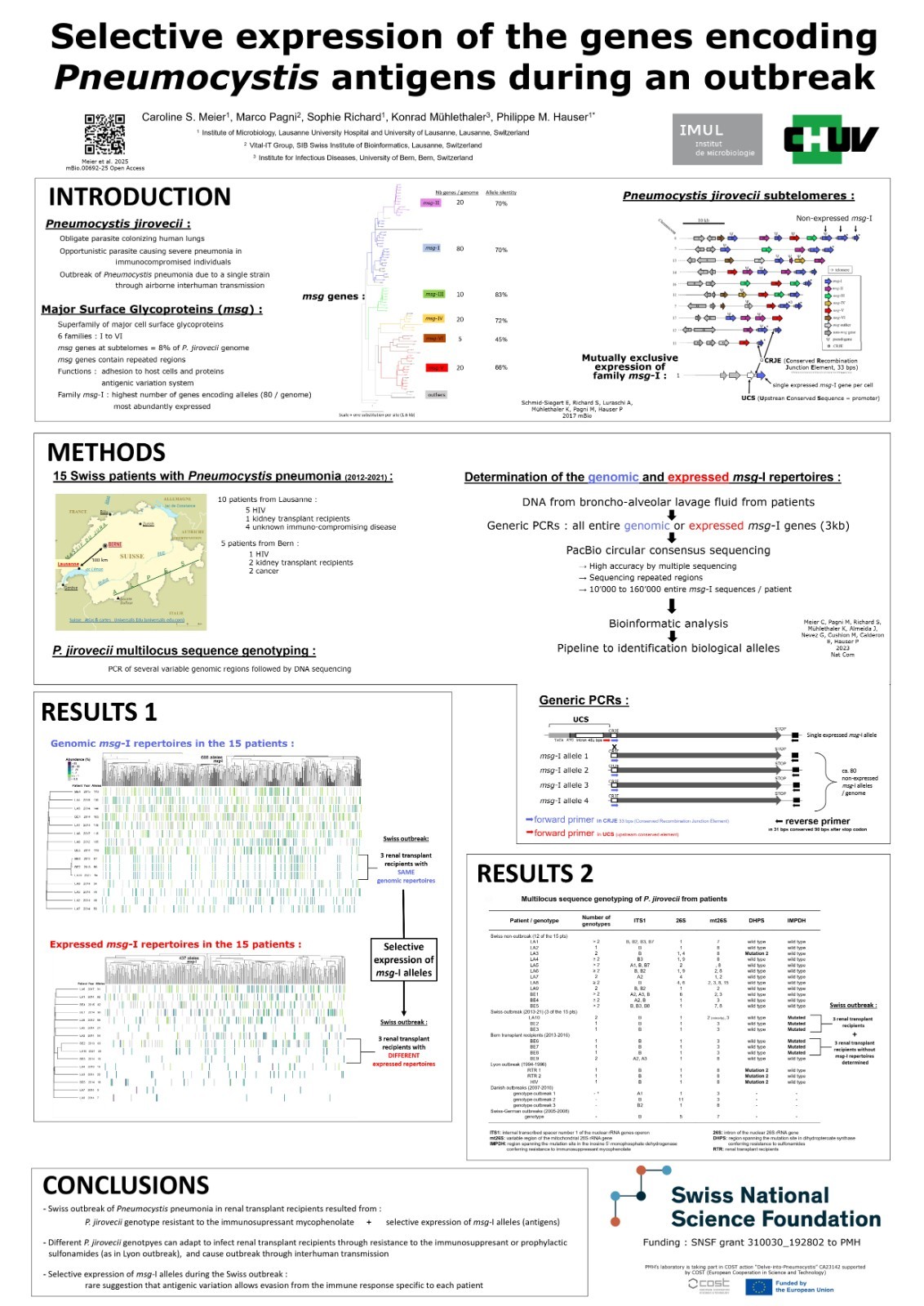
Selective expression of the genes encoding Pneumocystis antigens during an outbreak
New work by Dr. Hauser´s research group presented at the 17th European Conference on Fungal Genetics (ECFG17) in Dublin, Ireland (2025).
Fungus Pneumocystis causes severe pneumonia in patients with weakened immune systems. It possesses a genetic system to vary the antigens at the surface of its cells that are presented to the immune system of the patient. Dr. Hauser et al. determined the repertoires of P. jirovecii major surface glycoproteins genes of the most abundant family-I present in 15 Swiss patients with Pneumocystis pneumonia. The authors report for the first time that this system may have been implicated in the infections of renal transplant recipients involved in a suspected outbreak. Their observations suggest that the antigens presented might be selected to avoid the elimination of the fungus by the immune response specific to each patient. The resistance of the fungus to the immunosuppressant mycophenolate administered to these patients to prevent organ rejection probably also played a role in the infections during the suspected outbreak. More information: https://journals.asm.org/doi/10.1128/mbio.00692-25


